
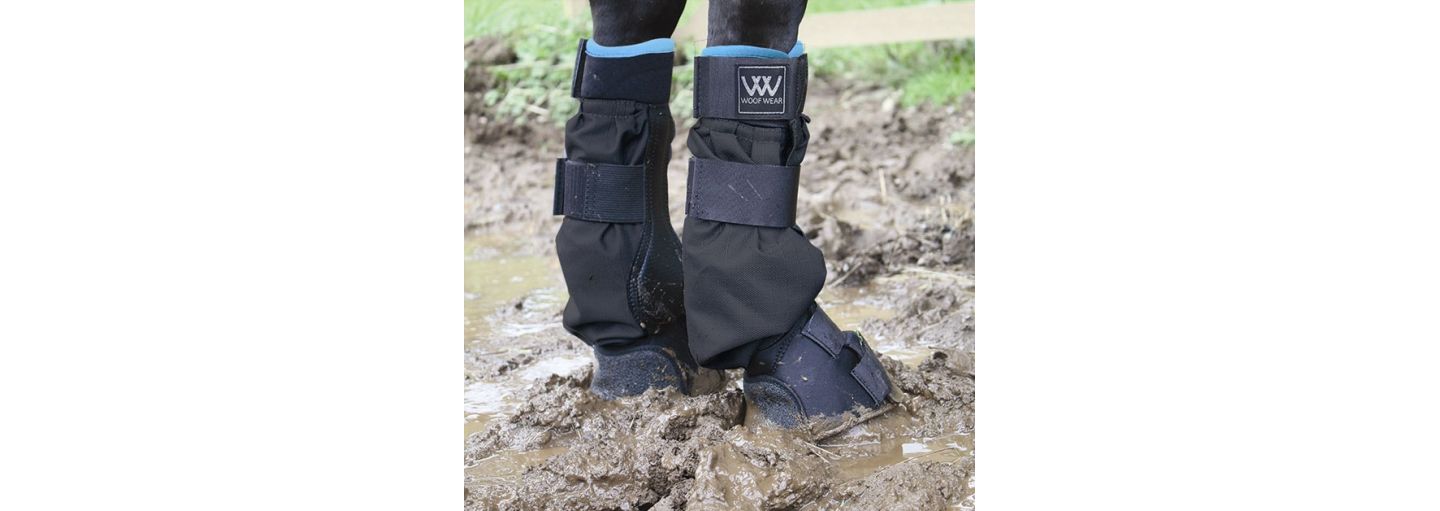
Autumn is upon us – and that means mud in the paddocks
The wet climate in Denmark means that many horse owners face problems with wet and muddy paddocks. Paddocks that can cause various problems for the horse – such as thrush, white line disease, and mud fever. What can you, as a horse owner, do to alleviate these problems?
The muddy paddocks Getting rid of muddy paddocks can be difficult. One of the best ways to tackle the mud is to install drainage, but this is typically a major and costly affair. Many benefit from ground stabilization, such as large rubber mats, gravel, or tiles, but this may not always be a long-term solution.
Mud fever in the pasterns and on the legs Mud in the paddocks is typically one of the main causes of mud fever in the horse's pasterns and up the legs. Mud fever is caused by bacteria creating an infection in the skin, which cracks and begins to ooze. You will notice mud fever as sores and typically a fair amount of scabbing. Mud fever is a painful experience for the horse if severe, and it can be difficult to get rid of once your horse is affected.
As with many things, prevention is better than cure – and the best way to prevent it is to keep the legs dry so the bacteria cannot thrive. You can do this with Woof Wear Mud Fever Boots, which work somewhat like wellington boots for horses. They are designed to create a secure and waterproof barrier from the knee/hock down over the hoof.
Hoof problems Thrush and white line disease are also conditions caused by bacteria and fungi that thrive in a damp environment. Thrush and white line disease often affect horses that spend a lot of time in stables, as the damp and warm bedding is the perfect environment for this type of bacteria.
If the hoof needs a break from the wet environment – either in the paddock or in the stable – to heal after a hoof abscess, bruised sole, or thrush, you can use Medical Hoof Boots from Woof Wear. The Medical Hoof Boot is a unique, close-fitting "medical shoe" designed to keep wounds, poultices, and dressings clean. Always remember to use overreach boots (e.g., Ultra Kevlar overreach boots) over a Medical Hoof Boot.
Behind Woof Wear Back in 1989, Louise Woof launched the groundbreaking "Woof Boot", which was the very first brushing boot made of neoprene – until then, leather boots had been used. This was a huge step forward as it meant horses could now wear lightweight leg protection rather than heavy leather boots. For more than 40 years, Woof Wear has been at the forefront of equestrian equipment for horse and rider, and their products are appreciated in stables everywhere by professionals, leisure riders, and the British Police.
No comment(s)
Write your comments
We will publicly show your name and comment on this website. Your email is to ensure that the author of this post can get back to you. We promise to keep your data safe and secure.